Bend Without Breaking: My Beginner Journey to Real Flexibility
Flexibility isn’t just for gymnasts or yoga masters—it’s a basic part of staying mobile, preventing injury, and feeling good in your own skin. I used to think I was ‘just stiff,’ but after years of sitting and skipping stretches, I realized my body was screaming for attention. This isn’t about touching your toes tomorrow; it’s about meeting your body where it is today and building sustainable movement habits that align with real health standards. The truth is, flexibility is not a genetic gift or a youthful advantage—it’s a skill, one that can be developed at any age with patience, consistency, and the right understanding. For many women between 30 and 55, whose days are filled with caregiving, work, and household demands, making time for physical well-being often falls to the bottom of the list. Yet, neglecting flexibility can quietly erode quality of life, leading to stiffness, discomfort, and a growing sense of physical limitation. This journey is not about achieving extreme poses or dramatic transformations. It’s about reclaiming ease in movement, reducing daily aches, and nurturing a body that supports a full, active life.
The Hidden Cost of Being "Too Stiff to Stretch"
Many people write off flexibility as something irrelevant to their daily lives, especially if they don’t participate in sports or structured exercise. The belief that "I’m just not flexible" is common, but it often masks a deeper issue: years of physical inactivity and repetitive postures that shorten muscles and reduce joint mobility. For women managing busy households and long workdays, sitting at a desk, driving, or standing in the kitchen can dominate hours of the day. Over time, these habits lead to tight hips, rounded shoulders, and a stiff lower back—changes that may seem minor at first but accumulate into real functional limitations. The reality is that flexibility is not a luxury reserved for athletes; it is a foundational element of physical health, just like strength and cardiovascular fitness.
One of the most persistent myths is that flexibility is determined solely by age or genetics. While it’s true that connective tissue naturally loses some elasticity over time, research shows that regular stretching can significantly offset these changes. A study published in the Journal of Aging and Physical Activity found that adults who engaged in consistent flexibility training maintained joint range of motion comparable to much younger individuals. The same study emphasized that even starting in midlife, participants experienced measurable improvements in mobility within just eight weeks. This challenges the assumption that "it’s too late"—a belief that keeps many from even trying. The truth is, the body responds to use. When muscles are regularly moved through their full range, they retain their ability to lengthen and support movement.
Another misconception is that flexibility doesn’t matter unless you’re injured. In fact, poor flexibility is a contributing factor to many common discomforts, including chronic lower back pain, knee strain, and neck tension. Tight hamstrings, for example, can pull on the pelvis, altering spinal alignment and increasing pressure on the lumbar discs. Similarly, tight chest muscles from prolonged sitting can cause the shoulders to round forward, leading to impingement and discomfort. These issues don’t appear overnight, but they develop silently, often dismissed as "just part of getting older." By the time pain becomes noticeable, the body has already adapted to restricted movement patterns. The good news is that these patterns can be reversed, not through extreme measures, but through small, consistent efforts that respect the body’s natural pace.
What Flexibility Really Means (And What It Doesn’t)
Before beginning any flexibility journey, it’s essential to understand what flexibility actually is—and what it is not. Flexibility refers to the ability of a muscle or group of muscles to lengthen passively through a range of motion. This is different from mobility, which involves the ability to move a joint actively using muscular control, and from hypermobility, which is an excessive range of motion that can sometimes increase injury risk. True flexibility is not about how far you can stretch or whether you can touch your toes; it’s about allowing your muscles to release tension and move freely within their natural, healthy limits.
The science behind flexibility involves more than just muscle fibers. Connective tissues like tendons and fascia play a significant role in how much a muscle can lengthen. Fascia, a web-like structure that surrounds muscles and organs, can become stiff and restricted due to inactivity, injury, or chronic tension. When fascia tightens, it limits movement and can contribute to a feeling of being "stuck." Additionally, the nervous system regulates flexibility through reflexes that protect muscles from overstretching. This is why forcing a stretch can trigger resistance—the body’s way of saying "this feels unsafe." Understanding this helps explain why aggressive stretching often backfires, leading to soreness or even strain, rather than lasting improvement.
It’s also important to recognize that everyone has a unique range of motion shaped by bone structure, joint alignment, and individual anatomy. Some people naturally have longer muscle bellies or more mobile joints, which may make certain stretches easier. However, this does not mean others are destined to remain stiff. The goal of flexibility training is not to achieve a universal standard but to improve within your own body’s potential. For example, a woman in her 40s with tight hip flexors from years of sitting can still gain meaningful range of motion through gentle, consistent stretching—even if she never achieves a full split. The key is progress, not perfection. Healthy flexibility is marked by ease of movement, reduced tension, and increased comfort in daily activities, not by extreme poses or comparisons to others.
Why Your Body Needs Flexibility—Beyond the Obvious
The benefits of flexibility extend far beyond the ability to bend or stretch. Regular stretching supports circulation by promoting blood flow to muscles and connective tissues, which aids in the delivery of oxygen and nutrients while removing metabolic waste. Improved circulation not only speeds up recovery after physical activity but also helps reduce muscle soreness and fatigue. For women managing energy levels through hormonal shifts, especially during perimenopause and menopause, maintaining good circulation can support overall vitality and reduce feelings of sluggishness.
Joint health is another critical benefit. Joints rely on movement to stay nourished—synovial fluid, which lubricates and cushions joints, is distributed through motion. When movement is limited, this fluid doesn’t circulate effectively, leading to stiffness and increased wear over time. Stretching helps maintain joint lubrication and supports the integrity of cartilage, reducing the risk of degenerative changes. This is especially important for weight-bearing joints like the knees and hips, which are prone to strain when surrounding muscles are tight. For instance, tight quadriceps can pull the kneecap out of alignment, contributing to pain and discomfort during walking or climbing stairs.
Flexibility also plays a key role in injury prevention. Muscles that are tight and inflexible are more prone to strain, especially during sudden movements or everyday activities like lifting groceries or bending to pick up a child. A study in the Scandinavian Journal of Medicine & Science in Sports found that individuals with limited hamstring flexibility were significantly more likely to experience lower back injuries. This is because tight hamstrings restrict pelvic movement, forcing the lower back to compensate during forward bends. By improving flexibility, the body can move more efficiently, reducing the strain on vulnerable areas. Additionally, better flexibility enhances coordination and balance, which become increasingly important as we age. This supports functional independence, allowing women to continue enjoying activities like gardening, dancing, or playing with grandchildren without fear of falling or pulling a muscle.
The Beginner Trap: Overdoing It and Giving Up Too Soon
One of the most common reasons people abandon flexibility training is frustration with slow progress or discomfort from overexertion. Many beginners approach stretching with the same mindset as strength training—believing that "no pain, no gain" applies here as well. But flexibility does not respond to force. Muscles are designed to protect themselves, and when stretched too aggressively, they contract in defense, tightening further rather than releasing. This protective reflex, known as the myotatic reflex, can make stretching counterproductive if not respected. Instead of improving range of motion, pushing too hard can lead to microtears, inflammation, and increased stiffness.
The psychological aspect is just as important. When progress is slow—measured in millimeters rather than inches—it’s easy to feel discouraged. A woman who has been sedentary for years may expect immediate results from a few days of stretching, only to feel disappointed when she still can’t touch her toes. This disappointment can lead to giving up altogether, reinforcing the belief that "I’m just not flexible." But flexibility is not linear. Some days will feel better than others, influenced by sleep, stress, hydration, and activity level. What matters is consistency, not daily perfection. The journey is not about achieving a specific milestone by a certain date; it’s about building a habit that supports long-term well-being.
Another factor that derails beginners is the lack of a realistic routine. Jumping into a 30-minute daily stretching session may seem admirable, but for someone with a packed schedule, it’s often unsustainable. When the routine feels like a burden, it’s more likely to be skipped. A more effective approach is to start small—just five to ten minutes a day, integrated into existing habits. Stretching after a shower, during a commercial break, or before bed can make it feel less like an added task and more like a natural part of the day. The goal is not intensity but regularity. Over time, these small efforts accumulate, leading to noticeable improvements that motivate continued practice.
Building a No-Pressure Routine: Simple Moves That Actually Stick
Creating a sustainable flexibility routine doesn’t require special equipment, a lot of time, or advanced knowledge. The most effective routines are simple, repeatable, and easy to integrate into daily life. For beginners, the focus should be on foundational stretches that target common areas of tightness: the neck, shoulders, hips, hamstrings, and lower back. These areas are often affected by daily postures and repetitive movements, making them ideal starting points for improvement.
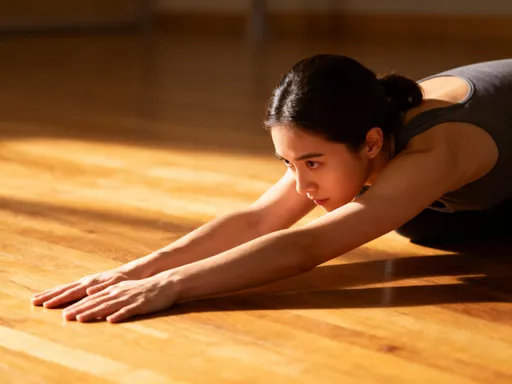
One effective practice is the seated forward fold. Sitting on the floor or a mat with legs extended, the person gently leans forward from the hips, reaching toward the toes. The key is to keep the back straight and avoid rounding the spine. This stretch targets the hamstrings and lower back, areas that commonly contribute to back pain. It should be held for 20 to 30 seconds, breathing deeply to encourage muscle release. Another helpful movement is the cat-cow flow, performed on hands and knees. Alternating between arching the back (cow) and rounding it (cat) warms up the spine and improves thoracic mobility. This sequence is especially beneficial for those who spend hours at a computer, helping to counteract slouched posture.
Shoulder rolls and neck stretches are also valuable for relieving upper body tension. Rolling the shoulders forward and backward in slow, deliberate motions helps release tightness in the trapezius and deltoid muscles. A gentle neck stretch—tilting the head to one side while keeping the shoulders relaxed—can ease tension headaches and improve posture. These movements can be done at a desk, in the car, or while watching TV, making them highly accessible. For hip flexibility, the figure-four stretch—lying on the back with one ankle crossed over the opposite knee and gently pulling the thigh toward the chest—targets the glutes and hip rotators, which often tighten from prolonged sitting.
The best routines are those practiced regularly, not perfectly. Aiming for five to ten minutes daily is more effective than one long session per week. Pairing stretching with another habit, like brushing teeth or brewing morning tea, can reinforce consistency. Over time, these small actions build a foundation of mobility that supports every aspect of daily life.
Listening to Your Body: The Real Guide to Safe Progress
One of the most important skills in flexibility training is learning to listen to your body. Unlike other forms of exercise, progress in stretching is not measured by speed, weight, or repetitions. It’s measured by subtle shifts—easier movement, reduced stiffness, improved posture. The body communicates through sensation, and understanding the difference between beneficial tension and harmful pain is crucial. A mild pulling sensation is normal and indicates that the muscle is being gently lengthened. Sharp, stabbing, or joint-related pain, however, is a signal to stop and reassess.
Body awareness is not instinctive for everyone, especially after years of ignoring physical cues. Many women are conditioned to push through discomfort, prioritizing responsibilities over self-care. But flexibility requires a different mindset—one of patience and respect. Instead of forcing a stretch, the focus should be on breathing into it, allowing the muscle to release naturally over time. This mindful approach not only prevents injury but also fosters a deeper connection between mind and body.
Tracking progress can also be helpful, but not in the way many expect. Rather than measuring how close the hands get to the toes, it’s more meaningful to notice functional improvements: bending down to tie shoes without wincing, turning to check a blind spot while driving with ease, or sleeping more comfortably at night. These real-life changes reflect true progress. Journaling brief notes—such as "felt less tight in hips today" or "stood taller after stretching"—can reinforce motivation and highlight patterns over time.
Flexibility as a Lifelong Health Standard—Not a Trend
Flexibility is not a short-term goal or a passing wellness trend. It is a lifelong practice that supports physical autonomy, comfort, and resilience. As we age, the ability to move freely becomes increasingly valuable. Simple acts like reaching into a cabinet, stepping onto a curb, or playing with a child require a baseline of mobility that flexibility helps maintain. By investing in this aspect of health now, women in their 30s, 40s, and 50s can build a body that remains strong, adaptable, and capable for decades to come.
The journey to better flexibility is not about transformation for the sake of appearance. It’s about honoring the body’s need for movement and care. It’s about reducing pain, preventing injury, and enhancing the quality of daily life. Every stretch, no matter how small, is an act of self-respect—a quiet promise to move with greater ease and confidence. When practiced with consistency and kindness, flexibility becomes more than a physical trait; it becomes a reflection of a life lived with intention and care. The goal is not to become someone else’s idea of flexible, but to become the most comfortable, capable version of yourself—one gentle stretch at a time.