Hiking Through History: Lisbon’s Hidden Landmarks Uncovered
You know that feeling when you’re hiking up a sun-drenched trail and suddenly—boom—a centuries-old fortress appears like a mirage? That’s Lisbon for you. Forget cookie-cutter tours; I’m talking real movement, sore calves, and jaw-dropping views of historic landmarks you never knew were hiding in plain sight. This city isn’t just trams and tiled buildings—it’s a playground for hikers who want culture with their cardio. With every step through its winding hills and olive-dotted ridges, you’re not just passing through history—you’re ascending into it. Lisbon rewards the curious and the active with vistas that unfold like ancient maps, where each landmark tells a story written in stone, sea, and sunlight.
Why Hiking Lisbon Beats the Ordinary Sightseeing
Most visitors experience Lisbon from the comfort of a tram seat or the back of a tour bus, gliding past pastel buildings and cobbled squares without truly feeling the city’s pulse. But there’s a deeper way to know this coastal capital—one that begins with laced-up boots and a willingness to climb. Hiking through Lisbon’s elevated neighborhoods and forested outskirts offers an immersive journey that static sightseeing simply can’t match. When you walk, you engage all your senses: the scent of jasmine on a hillside breeze, the crunch of gravel underfoot, the warmth of sun-baked stone walls as you pass centuries-old gateways.
Unlike standard tourist circuits that compress history into hurried photo stops, hiking allows time and space for reflection. As you ascend from the riverfront toward the city’s historic core, you physically move through layers of time. Roman roads once followed these same inclines. Moorish sentries patrolled the high ground for invaders. Later, during the Age of Discovery, sailors would have gazed down from these vantage points, watching caravels prepare to sail into the unknown. Walking these routes today, you don’t just learn about history—you inhabit its geography.
The advantage of hiking lies not only in physical engagement but in perspective. From elevated trails, you see how Lisbon’s landmarks were strategically placed—on hills for defense, near water for trade, aligned with celestial patterns for spiritual meaning. The city’s urban fabric reveals itself in three dimensions, not just on a flat map or guidebook page. You notice how the Sé Cathedral’s twin towers rise above the Alfama district like sentinels, or how the red-roofed buildings of Belém cluster protectively around the Jerónimos Monastery. These insights emerge only when you move through the terrain at human speed, with time to pause, breathe, and observe.
The Best Hiking Zones with Landmark Payoffs
Lisbon’s topography is a hiker’s dream—steep hills, coastal bluffs, and green lungs tucked between urban zones. Three areas stand out for combining natural beauty with proximity to iconic landmarks: Alto de São João, Monsanto Forest Park, and the historic hills of Alfama and Graça. Each offers a distinct blend of trail difficulty, scenic payoff, and cultural significance, making them ideal for those who want both exercise and enlightenment.
Alto de São João, located southeast of the city center, is anchored by a vast cemetery that doubles as a quiet arboretum. The surrounding trails wind through eucalyptus groves and offer sweeping views of the Tagus River. From the high points here, hikers can see the 25 de Abril Bridge stretching across the water like a steel harp string, with the Cristo Rei statue standing tall on the southern bank. The area’s elevation—over 100 meters in some places—provides a rare panoramic vantage of eastern Lisbon, including the historic shipyards of Marvila. Though less frequented by tourists, it’s a favorite among locals for morning walks and contemplative strolls.
Monsanto Forest Park, often called the “lungs of Lisbon,” spans over 1,000 hectares and crisscrossed by more than 40 kilometers of marked trails. This urban forest is a sanctuary of cork oaks, stone pines, and wild herbs, where the sound of traffic fades into birdsong. Several routes lead to viewpoints with direct sightlines to São Jorge Castle perched on its hilltop. One popular path begins near the National Museum of Natural History and Science, climbing gently through shaded ravines before emerging at Miradouro da Cruz do Colégio, where the full sweep of the castle’s battlements comes into view. The contrast between wild nature and medieval stone is striking—a reminder that Lisbon’s history is rooted in both earth and empire.
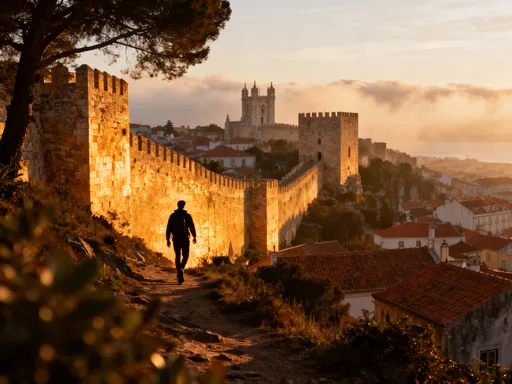
The hills of Alfama and Graça, though more compact, offer some of the most rewarding urban hikes. These neighborhoods are part of Lisbon’s oldest fabric, where narrow alleys twist like vines up steep inclines. A hike from the base of Graça Church to the entrance of São Jorge Castle takes about 25 minutes on foot but feels like a journey through centuries. The trail passes remnants of old city walls, hidden courtyards with laundry flapping in the wind, and occasional glimpses of the river between rooftops. The physical effort of the climb heightens the sense of arrival, making the castle’s grandeur feel earned rather than given.
Trails That Lead to Living History
Some of Lisbon’s most memorable hikes are those that culminate in a moment of revelation—a landmark appearing in full glory after a winding ascent. One such route begins at the base of the Graça neighborhood, just below the iconic Nossa Senhora da Graça Church. From here, a series of stepped pathways and narrow streets lead upward, flanked by bougainvillea-draped walls and tiled fountains. As you climb, the city spreads out below: terracotta roofs, domed chapels, and the distant shimmer of the Tagus.
About halfway up, the trail passes a small miradouro—viewpoint—where locals often gather with coffee in the early hours. It’s a perfect spot to pause and absorb the panorama: the pastel hues of downtown Lisbon blending into the blue haze of the river. From this vantage, you can already see the stone ramparts of São Jorge Castle looming above, its towers rising like ancient guardians. The final stretch is the steepest, but each step brings a new angle, a fresh detail—perhaps the flutter of the Portuguese flag atop the keep, or the sound of peacocks calling from within the castle grounds.
Reaching the entrance, you’re rewarded not just with access to one of Europe’s best-preserved Moorish fortresses, but with a profound sense of connection. You’ve arrived the way medieval pilgrims and soldiers once did—on foot, winded, and awed. Inside, the castle’s courtyards and battlements offer 360-degree views, but the most breathtaking sight may be the Belém Tower, a delicate Manueline fortress standing on the river’s edge nearly eight kilometers away. On clear mornings, especially at sunrise, the tower catches the first golden light, its ornate stonework glowing like filigree against the water. Seeing it from this distance, framed by sky and river, transforms it from a postcard image into a living monument.
Another powerful hike begins in the Belém district, starting at the Jerónimos Monastery and following the riverside promenade westward toward the Monument to the Discoveries. The path here is mostly flat, ideal for families or those seeking a gentler experience. But the cultural weight is immense. As you walk, you pass the Maritime Museum, the modern Centro Cultural de Belém, and finally the towering Padrão dos Descobrimentos—a 52-meter stone monument honoring Portugal’s seafaring explorers. The trail offers uninterrupted views of the river, where replicas of caravels are sometimes docked, sails furled like sleeping wings. This route isn’t about elevation; it’s about immersion in the legacy of a nation that once shaped global trade and navigation.
Architectural Wonders Seen from the Outside In
One of the unexpected joys of hiking in Lisbon is how it changes the way you see architecture. When you approach landmarks from a distance, through layers of landscape and light, they cease to be mere tourist attractions. They become part of a larger story—one of defense, faith, and human ambition. The Sé Cathedral, or Lisboa Cathedral, is a prime example. Most visitors enter through its grand west façade, but few realize how much more powerful it feels when seen from afar.
From the heights of Monsanto or the eastern slopes of Alto de São João, the cathedral emerges as a fortress of faith—its twin towers rising above the Alfama like a citadel. Its Romanesque design, with thick stone walls and narrow windows, was as much about protection as piety. Seeing it from a distance, you understand why it was built here: to dominate the skyline, to serve as a spiritual and physical anchor during centuries of invasion and upheaval. The hike to a viewpoint that frames the cathedral against the river allows you to appreciate its scale, its positioning, and its enduring presence.
Similarly, viewing the Jerónimos Monastery from the Tagus side, as you might while hiking the riverside trail from Belém to Alcântara, reveals a different dimension of its beauty. From this angle, the monastery’s south façade—covered in intricate carvings of ropes, armillary spheres, and maritime motifs—faces the water, as if greeting returning explorers. The sunlight catches the limestone, making the details shimmer. You can spot the delicate tracery of the windows, the statues in their niches, and the way the roofline steps back like a crown. These observations are nearly impossible from ground level in the crowded courtyard, where visitors jostle for photos. Distance, in this case, brings clarity.
Even modern structures gain meaning when seen in context. The sleek curves of the MAAT (Museum of Art, Architecture and Technology) on the Belém waterfront look striking from the riverside trail. But when viewed from a hilltop in Alcântara, its wave-like roof appears as part of a dialogue between old and new—anchored between the industrial chimneys of the old power station and the historic domes of downtown. Hiking allows you to see these relationships, to understand how Lisbon’s architecture is not frozen in time but constantly evolving, yet always in conversation with its past.
What to Bring (And What to Skip)
Preparing for a hiking adventure in Lisbon doesn’t require technical gear, but a few smart choices can make the difference between an enjoyable trek and a tiring ordeal. First and foremost, footwear matters. The city’s streets and trails are paved with smooth, slippery limestone or uneven cobblestones known as calçada portuguesa. Shoes with strong grip and ankle support are essential, especially on steep descents where loose stones can shift underfoot. Avoid smooth-soled sneakers or sandals, no matter how stylish.
Layering is another key consideration. Lisbon’s coastal climate means temperatures can vary significantly between sea level and hilltops. Mornings may be cool, even foggy, while midday sun on exposed trails can be intense. A moisture-wicking base layer, a lightweight windbreaker, and a sun hat offer flexibility. A small backpack with a refillable water bottle—aim for at least one liter—is non-negotiable. While fountains and cafes are available in most areas, they’re not evenly spaced, and dehydration can sneak up on you, especially in summer.
Navigation tools are crucial, but with a caveat. While GPS-enabled phones are helpful, signal can be spotty in deep valleys or behind thick stone walls. Relying solely on digital maps may leave you stranded. Instead, download offline maps before your hike or carry a compact paper guidebook with trail diagrams. Many local bookshops sell hiking maps that include elevation profiles and historical notes—useful for understanding what you’re seeing without pulling out your phone every few minutes.
On the other hand, there are items best left behind. Overpacking is a common mistake. A heavy bag with snacks, extra clothes, and gadgets can turn a moderate hike into a burden. Stick to the essentials: water, sunscreen, a light snack, and perhaps a small camera. Avoid large cameras with bulky lenses unless you’re prepared to carry them uphill. Similarly, while music headphones can be tempting, consider leaving them off. The sounds of Lisbon—the chirping of birds, the distant chime of church bells, the laughter of children in a plaza—are part of the experience. Staying alert also ensures you don’t miss trail markers or opportunities to greet fellow hikers.
Local Etiquette and Sustainable Exploration
As hiking becomes more popular in Lisbon, respecting local customs and protecting the environment is more important than ever. Many trails pass through residential neighborhoods, historic sites, or protected green spaces. Simple courtesies go a long way in preserving the warmth of the city’s hospitality. When walking through quiet streets in Alfama or Graça, keep noise to a minimum, especially in the early morning or late evening. Greeting locals with a quiet “bom dia” (good morning) or “boa tarde” (good afternoon) can open doors—sometimes literally, as friendly residents may offer directions or share stories about the area.
Equally important is leaving no trace. While Lisbon is generally clean, littering—even a banana peel or tissue—can harm wildlife and degrade the natural beauty of places like Monsanto Forest Park. Always carry a small bag for trash and dispose of it properly. Avoid stepping off marked trails, not only to protect fragile vegetation but also to prevent erosion on steep slopes. Some paths are centuries old; preserving them ensures future hikers can enjoy the same views.
When visiting religious or cultural sites along your hike—such as a small chapel or memorial—observe quiet reverence. These are not just photo opportunities; they are places of meaning for locals. Dress modestly when entering churches, covering shoulders and knees if required. Refrain from loud conversations or intrusive photography, especially during services or private moments of prayer. By showing respect, you honor the living culture that surrounds these landmarks.
Sustainable exploration also means supporting the community. After a long hike, refuel at a family-run café rather than a chain restaurant. Order a traditional pastry like a pastel de nata or a simple sandwich de pernil (roast pork). These small choices sustain local businesses and deepen your connection to the place. You’re not just passing through—you’re becoming part of the rhythm of daily life.
Making the Most of Your Post-Hike Moments
The end of a hike is not just a return to rest—it’s a moment of reflection, a chance to let the experience settle. In Lisbon, this often means finding a quiet spot with a view and treating yourself to a small reward. Whether it’s a cold glass of freshly squeezed orange juice, a creamy coffee, or that iconic custard tart dusted with cinnamon, the pleasure is amplified by the effort that came before. There’s a deep satisfaction in sitting on a riverside bench, feet propped up, knowing you’ve earned this moment.
Some of the best post-hike spots are the city’s lesser-known miradouros. The Miradouro de Santa Luzia, tucked in Alfama, offers a tiled terrace overlooking the Tagus, where azulejo panels depict old Lisbon scenes. It’s usually quieter than the more famous viewpoints, perfect for contemplation. Another favorite is the Miradouro da Senhora do Monte, the highest viewpoint in the city, reachable by a gentle climb from Graça. At sunset, the sky turns gold and pink, casting a warm glow over the red rooftops and the distant spires of churches. Locals bring wine and bread; visitors sit in silence, absorbing the beauty.
These moments of stillness are where the true value of hiking reveals itself. You’ve not only seen Lisbon’s landmarks—you’ve felt their presence, understood their context, and connected with the land that holds them. The climb, the sweat, the pause for breath on a steep turn—all of it becomes part of the story. And when you finally look out over the city, bathed in evening light, you realize something profound: Lisbon’s history isn’t locked in museums or guidebooks. It’s alive in the air, the stone, the sea breeze. It’s waiting to be discovered, one step at a time.
Hiking through Lisbon transforms sightseeing into storytelling. Each step unravels history, each climb delivers meaning. When you reach the top and see those landmark rooftops glowing in the golden light, you won’t just see the city—you’ll feel like you’ve lived it.