Lost in the Alps: Why Vaduz’s Hidden Corners Stole My Heart
Nestled in the embrace of the Alps, Vaduz, Liechtenstein, is more than just a dot on the map—it’s a quiet masterpiece. I came for the views but stayed for the soul-soothing charm of its cobbled lanes, hillside trails, and storybook landscapes. If you're craving authentic European beauty without the crowds, this is it. Let me show you the scenic spots that made my trip unforgettable. With its seamless blend of alpine serenity, cultural depth, and understated elegance, Vaduz offers a rare travel experience—one that doesn’t shout for attention but lingers in your memory long after you’ve left.
First Impressions: A Country Smaller Than Your Hometown
Liechtenstein is one of the world’s smallest countries, both in area and population, yet its presence in the heart of Europe is anything but insignificant. Spanning just 160 square kilometers—smaller than many cities—it fits snugly between Switzerland and Austria, cradled by the Rhine River to the west and the soaring peaks of the Alps to the east. Arriving in Vaduz, the capital, one is immediately struck by the absence of urban clamor. There are no towering skyscrapers, no blaring horns, no overwhelming crowds. Instead, the city unfolds gently: a cluster of pastel-hued buildings, tree-lined avenues, and a skyline dominated not by commercial signs but by the majestic silhouette of Vaduz Castle high above.
The modest scale of Liechtenstein is not a limitation—it’s an invitation. For travelers accustomed to navigating packed tourist centers, this microstate offers a refreshing alternative: intimacy. You can walk from one end of Vaduz to the other in under 30 minutes, yet each step reveals a new detail—a hand-painted shop sign, a hidden garden, a quiet bench with a view of snow-dusted mountains. The pace here encourages mindfulness. You notice the way sunlight glints off the Rhine in the late afternoon, or how the scent of pine drifts down from the hillsides after a morning rain. It’s a place where stillness becomes a luxury, and simplicity becomes profound.
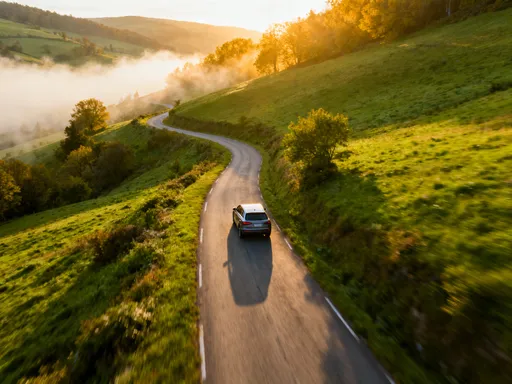
The Rhine Valley forms a natural corridor that shapes the country’s geography and atmosphere. Flanked by vineyards and forested slopes, it channels cool alpine air and offers some of the clearest skies in the region. This setting contributes to Vaduz’s air of tranquility, making it an ideal destination for those seeking respite from the constant motion of modern life. Whether arriving by train from Zurich or driving along winding mountain roads, the transition into Liechtenstein feels like crossing a threshold into a calmer world—one where time slows and beauty reveals itself in quiet moments.
The Iconic Castle on the Hill: Vaduz Fortress in Context
Rising dramatically from a rocky outcrop at 120 meters above the city, Vaduz Castle is the undisputed symbol of Liechtenstein. With origins dating back to the 12th century, the fortress has been expanded and renovated over the centuries, evolving into the residence of the Princely Family of Liechtenstein. Though it is not open to the public—owing to its status as a private home—it remains one of the most photographed landmarks in the Alps. Its turrets and stone walls, weathered by centuries of wind and snow, stand as a testament to endurance and continuity in a rapidly changing world.
Visitors can appreciate the castle from multiple vantage points, each offering a distinct perspective. The most popular route begins at the base of the hill near the national museum and follows a well-marked footpath through the forest. The ascent takes about 20 to 30 minutes, depending on pace, and rewards hikers with panoramic views of Vaduz and the Rhine Valley. Along the way, interpretive signs provide historical context, detailing the castle’s role in regional defense, its reconstruction in the 17th century, and its significance as a symbol of national identity.
Photographers will find endless opportunities along this trail. Early morning light bathes the castle in a golden hue, while late afternoon casts long shadows across the valley, creating dramatic contrasts. The best unobstructed view can be found near the bend in the road just before the final stretch of the path—a spot often favored by locals and seasoned visitors alike. It’s important to remember that while the exterior is accessible, the interior remains private. There are no guided tours, ticket offices, or visitor facilities at the site, reinforcing the castle’s role as a living heritage site rather than a commercial attraction.
This respectful distance enhances the mystique of the fortress. Unlike heavily touristed castles elsewhere in Europe, Vaduz Castle retains an air of authenticity. It is not preserved behind glass or stripped of its function—it is lived in, maintained, and deeply woven into the nation’s identity. For travelers, this offers a rare glimpse into a monarchy that remains closely tied to its people and landscape. The castle’s quiet dignity mirrors the character of the country itself: reserved, proud, and enduring.
Walking the Wine Trails: Where Scenery Meets Tradition
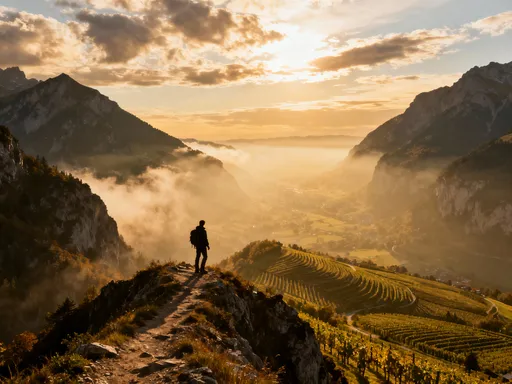
Above the rooftops of Vaduz, terraced vineyards climb the southern slopes of the Alps, their orderly rows tracing the contours of the land. These vineyards are not merely scenic—they are the heart of Liechtenstein’s agricultural heritage. Despite its size, the country produces high-quality wines, particularly Pinot Noir, Riesling, and Gewürztraminer, cultivated in microclimates shaped by alpine sun exposure and mineral-rich soils. The Grape Trail—a network of marked footpaths weaving through these vineyards—offers an immersive way to experience both the beauty and tradition of local winemaking.
The trail begins near the edge of the city and gradually ascends through family-owned estates, many of which have been passed down through generations. Along the way, walkers are treated to sweeping views of the Rhine Valley, with Switzerland visible on the far bank. In spring, the vines are pruned and budding; in summer, they flourish under long daylight hours; but it is autumn that draws the most visitors. The harvest season, known locally as *Lese*, transforms the hillsides into a tapestry of red and gold. Wineries open their doors for tastings, and festivals celebrate the year’s yield with music, food, and communal joy.
One of the most rewarding loops is the 5-kilometer route from Vaduz to Triesenberg, a neighboring village perched higher in the mountains. This path combines vineyard views with alpine meadows and offers occasional glimpses of grazing cattle and wildflowers. Interpretive panels along the trail explain the winemaking process, from grape selection to fermentation, and highlight the role of sustainable practices in preserving the delicate ecosystem. Some estates even allow visitors to participate in grape picking during harvest, providing a hands-on connection to the land.
The wine culture here is deeply rooted in moderation and craftsmanship. There are no vast industrial operations—only small, family-run vineyards that prioritize quality over quantity. Many of the wines are available in local restaurants and shops, often paired with regional specialties like alpine cheese, cured meats, and hearty breads. For travelers, sampling these wines is not just a culinary pleasure but a cultural experience—an invitation to slow down and savor the fruits of a land that values patience and care.
Art in the Open Air: The Kunstmuseum and Urban Landscapes
In a country where nature commands attention, Vaduz also makes a strong case for the power of human creativity. The Kunstmuseum Liechtenstein, a striking black basalt building located just steps from the city center, stands as a bold statement of modern art in an alpine setting. Opened in 2000, the museum houses a significant collection of contemporary works, including pieces by international artists such as Andy Warhol, Roy Lichtenstein, and Yves Klein. Its architecture—angular, minimalist, and reflective—creates a deliberate contrast with the soft curves of the surrounding mountains, sparking a visual dialogue between nature and abstraction.
Inside, the museum’s galleries are thoughtfully curated to balance local and global perspectives. Permanent exhibitions include works from the Princely Art Collection, one of the oldest and most comprehensive private art collections in Europe, dating back over 400 years. Rotating exhibits bring in international voices, ensuring that Vaduz remains connected to broader artistic currents. The museum also features a sculpture garden, where large-scale installations are displayed among native plants and stone pathways, blurring the line between indoor and outdoor space.
Art extends beyond the museum walls. As you walk through Vaduz, you’ll encounter public sculptures at nearly every turn. The Prince Franz Josef II Monument in the city center honors the country’s longest-reigning monarch with a dignified bronze figure, while modern pieces like *The Time Sculpture* near the post office play with perception and movement. Even the buildings themselves contribute to the aesthetic—low-rise, well-proportioned structures with clean lines and natural materials that complement rather than compete with the landscape.
This integration of art and environment reflects a broader philosophy: that beauty should be accessible, not confined to galleries. Children sketch in the museum’s education corner, couples pause to photograph a sculpture against the mountain backdrop, and tourists linger on benches absorbing both the art and the air. In a world where culture is often commodified, Vaduz offers a refreshing model—one where art is part of daily life, not a spectacle to be consumed and forgotten.
Beyond the Capital: Day Trips to Scenic Neighbors
While Vaduz itself offers a rich tapestry of experiences, the true depth of Liechtenstein’s beauty unfolds when you venture beyond the capital. The country’s compact size makes day trips both efficient and rewarding. One of the most popular destinations is Malbun, a small alpine village located about 15 kilometers southeast of Vaduz. Nestled at 1,600 meters above sea level, Malbun transforms with the seasons—serving as a ski resort in winter and a hiking and mountain biking haven in summer. The drive there winds through dense forests and open meadows, offering frequent pull-offs for photos of grazing sheep and cascading streams.
Another highlight is the Liechtenstein Trail, a long-distance hiking route that spans the entire length of the country from north to south. Divided into seven stages, it passes through nine municipalities, each with its own character and charm. Hikers traverse forests, vineyards, and high-altitude plateaus, often with views stretching into Switzerland and Austria. Waymarked with clear signage and supported by mountain huts and rest areas, the trail is suitable for intermediate hikers and offers a profound sense of connection to the land. Many choose to complete one or two stages rather than the full route, using public transport to return to Vaduz.
For those interested in geology and natural history, the Gaflei Valley in the eastern part of the country provides a quieter alternative. Accessible by a narrow road from Triesenberg, this remote area features glacial formations, alpine flora, and panoramic views of the Rätikon mountain range. It’s a favorite among birdwatchers and nature photographers, particularly at dawn when mist rises from the valley floor. Because it sees fewer visitors, Gaflei offers a sense of solitude that is increasingly rare in the Alps.
Transportation between these destinations is straightforward. Liechtenstein’s public bus system connects all major towns and runs frequently during peak hours. For greater flexibility, renting a bicycle or car allows you to explore at your own pace. Trains from nearby Sargans, Switzerland, also provide easy access, making Vaduz an ideal base for exploring the wider Alpine region. These excursions don’t just expand your itinerary—they deepen your understanding of how a small nation can steward a diverse and breathtaking landscape.
Practical Magic: Navigating Vaduz Like a Local
One of the joys of visiting Vaduz is how effortlessly it can be explored on foot. The city center is compact, walkable, and well-organized, with clear signage in German and English. Most attractions—museums, shops, cafes, and trailheads—are within a 15- to 20-minute walk of each other. Comfortable walking shoes are essential, especially if you plan to hike the vineyard paths or ascend to the castle viewpoints. Weather in the Alps can change quickly, so packing a lightweight rain jacket and layering clothing is advisable, even in summer.
Public transportation is reliable and affordable. The Liechtenstein Bus network covers the entire country and connects seamlessly with Swiss rail services. A single ticket allows transfers and is valid for several hours, making it easy to plan multi-stop itineraries. For longer stays, the Alpenrhein Verkehrsverbund (AVV) day pass offers unlimited travel across Liechtenstein and parts of eastern Switzerland—an excellent option for day trippers. Timetables are available online and at major stops, though service may be less frequent on weekends and holidays, so planning ahead is key.
Language is not a barrier for English speakers. While German is the official language, most residents speak fluent English, particularly in service industries. Signs, menus, and brochures are often bilingual. Visitor information centers in Vaduz and Triesenberg provide maps, brochures, and personalized recommendations. Staff are friendly and knowledgeable, happy to advise on trail conditions, weather forecasts, or hidden gems off the main routes.
Opening hours in small towns can be more limited than in larger cities. Many shops close by 6:00 PM, and some museums are closed on Mondays. Restaurants may have seasonal hours, especially in mountain villages. To make the most of your visit, aim to start your day early and plan indoor activities for rainy afternoons. This rhythm—aligning your schedule with the local pace—enhances the experience, allowing you to appreciate the unhurried way of life that defines Liechtenstein.
Why This Tiny Place Leaves a Big Impression
Vaduz may not dominate travel brochures or trend on social media, but its quiet brilliance lingers in a way that louder destinations often do not. It is a place where nature and culture coexist in harmony, where history is lived rather than staged, and where the simple act of walking through a vineyard or pausing to admire a mountain view feels like a form of renewal. In an age of overcrowded landmarks and rushed itineraries, Liechtenstein offers a different model of travel—one rooted in mindfulness, respect, and connection.
What makes this microstate so memorable is not just its beauty, but the way it invites you to slow down and notice. There are no grand spectacles demanding your attention—only subtle wonders: the way light shifts on a castle wall, the taste of a freshly poured glass of Pinot Noir, the sound of cowbells echoing from a distant meadow. These moments accumulate, forming a deeper kind of satisfaction than any checklist of sights can provide.
Vaduz challenges the assumption that meaningful travel requires distance or extravagance. Sometimes, the most profound experiences come from the smallest places—those that allow space for reflection, for stillness, for being present. It reminds us that discovery is not always about seeing more, but about seeing differently. In choosing to visit such a quiet corner of Europe, you’re not just exploring a destination; you’re embracing a mindset—one of curiosity, calm, and quiet appreciation.
So if you find yourself drawn to alpine vistas, cultural richness, and a pace of life that feels genuinely unhurried, consider Vaduz. Let it surprise you. Let it restore you. And let its hidden corners, like whispers on the wind, steal your heart just as they did mine.