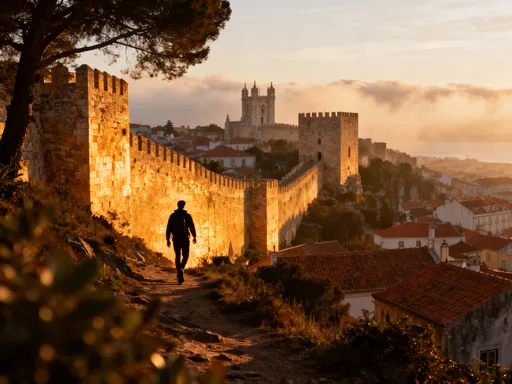
Lost in the Soul of Luang Prabang’s Cityscape? Let Me Show You the Real Magic
Luang Prabang isn’t just a dot on the map—it’s a living canvas where golden temples meet misty mountains and slow-moving rivers whisper stories of centuries past. I wandered its quiet streets at dawn, camera in hand, heart wide open, and discovered a cityscape that feels both ancient and alive. This isn’t just travel—it’s connection. The air carries the scent of frangipani and woodsmoke, the light spills like honey over tiled roofs, and time moves with the rhythm of bare feet on stone. In this sacred town nestled between the Mekong and Nam Khan rivers, beauty isn’t staged; it unfolds naturally, quietly, in layers. To see Luang Prabang is not to photograph landmarks, but to witness a way of life preserved in stone, light, and silence.
First Light Over the Mekong: The Rhythm of a Waking City
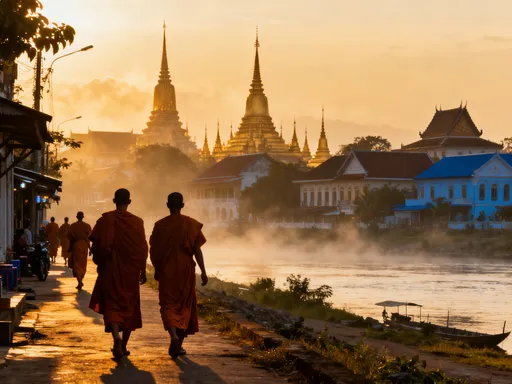
Each morning in Luang Prabang begins with a hush, a breath held before the day exhales into motion. Along the Mekong River, the city stirs gently, not with horns or engines, but with the soft shuffle of saffron robes and the rustle of banana leaves. Long before sunrise, monks from the many temples begin their alms rounds, walking barefoot in single file along the riverfront path. Families and hotel staff kneel on mats, placing sticky rice, fruit, and boiled eggs into the waiting alms bowls. This daily ritual, known as Tak Bat, is not performed for tourists—it is a sacred act of merit-making, deeply woven into the spiritual and social fabric of the city. The light at this hour is pale gold, diffused through morning mist, casting long shadows that stretch across the cobblestones like fingers reaching into the past.
The Mekong River, wide and slow-moving, acts as both a physical and symbolic spine for Luang Prabang. Its banks are not lined with concrete or high-rises, but with low-slung wooden homes, family-run guesthouses, and quiet parks where elders practice tai chi. The river’s presence shapes the city’s rhythm, offering a natural boundary that keeps development contained and human-scaled. Boats glide silently downstream, carrying supplies to riverside villages or tourists to nearby waterfalls. The air is cool, scented with damp earth and jasmine, and the only sounds are the lapping of water, the distant chime of temple bells, and the soft murmur of early risers beginning their day. This quiet symphony is the true soundtrack of Luang Prabang—a city that wakes not with urgency, but with intention.
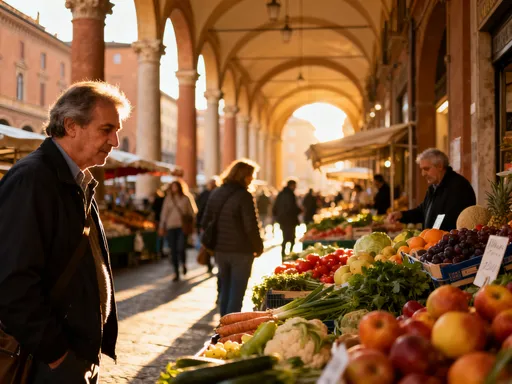
For the observant traveler, these early hours offer the purest glimpse into the city’s soul. Vendors set up bamboo stalls along Sisavangvong Road, arranging pyramids of mangoes, betel nuts, and handmade textiles. Street dogs stretch and yawn in doorways. A woman sweeps her porch with a broom of tied twigs, her movements rhythmic and unhurried. There is no rush, no clamor for attention—only the steady, grounded pace of a community rooted in tradition. To walk the riverside at dawn is to step into a different relationship with time, one where presence matters more than productivity. It is here, in the stillness before the world fully wakes, that Luang Prabang reveals its first magic: the beauty of simplicity, observed without spectacle.
Temples That Touch the Sky: Spirituality in the Skyline
Rising above the tree line like golden sentinels, the temples of Luang Prabang are not merely places of worship—they are the city’s architectural heartbeat. With over thirty active wats scattered across the peninsula, their spires and sweeping roofs define the skyline, creating a silhouette that is instantly recognizable and deeply serene. Wat Xieng Thong, often regarded as the crown jewel of Lao temple architecture, sits near the confluence of the Mekong and Nam Khan rivers. Its low-slung roof, layered like folded hands in prayer, is adorned with intricate glass mosaics depicting the Tree of Life. Unlike grandiose religious monuments in other parts of Asia, Wat Xieng Thong exudes humility and harmony, blending seamlessly into the surrounding greenery and residential neighborhoods.
What makes Luang Prabang’s temples unique is their integration into daily life. They are not isolated tourist attractions behind velvet ropes, but living centers of community activity. Children play in temple courtyards after school. Elders sit in shaded pavilions, chanting or meditating. Monks study, eat, and sleep within the temple walls, maintaining a rhythm that has changed little over centuries. Wat Visoun, one of the oldest temples in the city, houses the sacred Pha Bang Buddha—after which Luang Prabang is named. Though the original statue is kept in a museum for preservation, the temple remains a focal point of devotion, especially during festivals like Pi Mai Lao, the Lao New Year.
The placement of these temples within the urban fabric is no accident. Built on slight elevations or at key intersections, they serve as visual and spiritual anchors, guiding both the eye and the soul through the city. Their gilded spires catch the morning and evening light, acting as natural beacons that orient visitors and locals alike. The architecture itself—steep tiled roofs, wooden pillars, and ornate carvings—reflects a deep respect for nature and balance. Even in their grandeur, these temples do not dominate the landscape; they belong to it. To walk past a wat at dusk, hearing the low hum of evening chants and seeing candlelight flicker through latticed windows, is to understand that in Luang Prabang, spirituality is not separate from the cityscape—it is the cityscape.
French Echoes in Wooden Shutters: Colonial Charm Meets Lao Simplicity
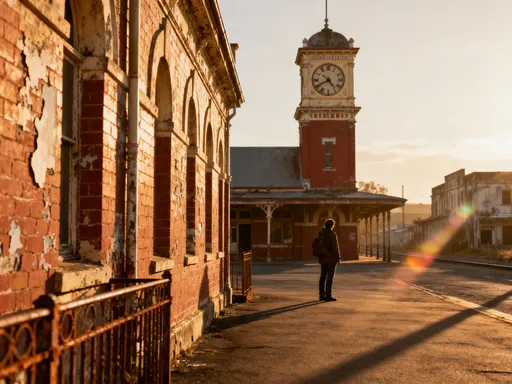
Wandering through Luang Prabang’s UNESCO-listed old town feels like stepping into a carefully preserved moment in time. The narrow streets, laid out in a colonial grid, are lined with buildings that whisper of a complex history—where French Indochina met traditional Lao craftsmanship. Pastel-hued villas with shuttered windows and wrought-iron balconies stand shoulder-to-shoulder with wooden stilt houses adorned with carved eaves and naga (serpent) motifs. The fusion is not jarring, but harmonious—a visual dialogue between Mediterranean elegance and Southeast Asian warmth. These structures, many over a century old, have been restored with care, their faded paint and weathered wood telling stories of resilience and quiet beauty.
The French influence is most evident in the administrative buildings, former residences, and cafés that line the main avenues. High ceilings, ceiling fans, and shuttered windows were designed for ventilation in the tropical heat, a practical legacy that now adds to the city’s charm. Yet, unlike colonial districts in other parts of the world, Luang Prabang’s architecture never feels imposed. The French never fully remade the city in their image; instead, they adapted to its rhythms and scale. Buildings rarely rise above two stories, preserving sightlines to temples and mountains. Courtyards remain open, often filled with banana trees, potted orchids, or family altars. The result is a city that feels intimate, not grand—a place where architecture serves people, not power.
Today, many of these colonial-era homes have been transformed into boutique hotels, artisan workshops, and family-run restaurants. A former French officer’s residence might now house a silk-weaving studio, where women in traditional sinh skirts work at wooden looms. Another might host a café serving strong Lao coffee with sweetened condensed milk, served on a balcony overlooking a quiet street. These adaptive reuses honor the past without freezing it in time. The city breathes through these spaces, allowing history to live quietly in the present. For the traveler, this architectural blend offers more than aesthetic pleasure—it invites reflection on how cultures can coexist, not through domination, but through quiet integration. In Luang Prabang, the past is not a museum exhibit; it is a lived-in, lived-with reality.
The Palette of a Thousand Shades: How Light Paints the City
In Luang Prabang, light is not just a condition—it is a character. The way it falls across stucco walls, gilded stupas, and river surfaces transforms the city throughout the day, creating a shifting palette that feels almost painterly. During the dry season, from November to February, the air is clear and the light crisp, casting sharp contrasts and vibrant colors. Mornings begin with a soft, diffused glow that turns pink and gold as the sun clears the eastern hills. By midday, the light is strong and white, bleaching the streets into near monochrome, sending residents retreating into shaded verandas and cool temple halls.
But it is during the golden hours—just after sunrise and before sunset—that Luang Prabang reveals its most magical transformations. As the sun dips low, the entire city seems to warm from within. Stucco walls, painted in faded ochre, mint green, and sky blue, absorb and reflect the light, glowing like embers. The spires of Wat Mai and Wat Aham catch the last rays, their gold leaf shimmering as if lit from within. Across the Mekong, the water becomes a mirror, doubling the temples and trees in rippling reflections. Shadows stretch long and lean, creating geometric patterns on the ground, while the air takes on a golden haze that softens edges and blurs time.
Photographers and artists have long been drawn to this luminous quality, but even casual observers cannot help but notice how light shapes perception in Luang Prabang. A quiet alley in harsh midday sun may seem unremarkable, but in the late afternoon, it becomes a corridor of warmth and texture, with shafts of light slicing through wooden shutters and illuminating dust motes in the air. The changing light also affects mood—early mornings feel reverent, midday is vibrant, and evenings are deeply contemplative. To experience the city across a full day is to witness a living canvas, repainted hourly by the sun. This ever-shifting beauty reminds us that places, like people, have many faces—each one true, each one fleeting.
Hidden Alleys and Local Life: Where the City Breathes
Beyond the postcard-perfect temples and riverside cafés, Luang Prabang lives in its backstreets—narrow lanes that wind between homes, workshops, and hidden courtyards. These alleys, often unnamed and unmarked, are where the city breathes most authentically. Here, life unfolds without performance. A woman grinds chili paste on a stone mortar in her doorway. Children chase a deflated ball past a wooden loom where their grandmother weaves intricate patterns into silk. A monk pauses to accept a drink of water from a neighbor. These moments are not staged; they are simply lived.
Exploring these quieter corners requires a slower pace and a respectful presence. Unlike the bustling markets or crowded temples, these neighborhoods are not designed for tourism. Many homes are built on stilts, with open ground floors used for storage, animals, or small family businesses. Workshops for silversmithing, paper-making, and wood carving operate out of modest spaces, their tools worn smooth by years of use. The Lao people are famously gentle and hospitable, but privacy is valued. A quiet nod, a soft-spoken “sabaidee” (hello), and a willingness to pause and observe—rather than intrude—are the keys to meaningful connection.
One might stumble upon a family preparing food for a temple offering, laying out trays of rice, fruit, and grilled fish on a woven mat. Or discover a small roadside shrine adorned with marigolds, incense, and faded photographs—personal altars where prayers are offered for health, safety, and peace. These spaces, though humble, are rich with cultural meaning. They reveal a worldview in which the sacred and the everyday are not separate, but intertwined. For the traveler, venturing into these neighborhoods is not about ticking off sights, but about cultivating presence. It is in these unguarded moments—watching an elder mend a fishing net, hearing the rhythmic thud of a rice pestle—that Luang Prabang reveals its deepest truths: that beauty resides not in grandeur, but in the quiet dignity of daily life.
From Mount Phousi: The View That Ties It All Together
No visit to Luang Prabang is complete without the climb to the summit of Mount Phousi, a 100-meter hill that rises like a gentle fist from the heart of the old town. The ascent, though steep, is lined with vendors selling water, fans, and handmade bracelets. Stone steps, worn smooth by countless footsteps, wind through banyan trees and past small shrines housing golden Buddhas. Monkeys—some tame, others wary—watch from the branches, occasionally darting down to snatch a snack. The climb itself becomes a metaphor: a physical journey that mirrors the city’s spiritual ascent, step by deliberate step.
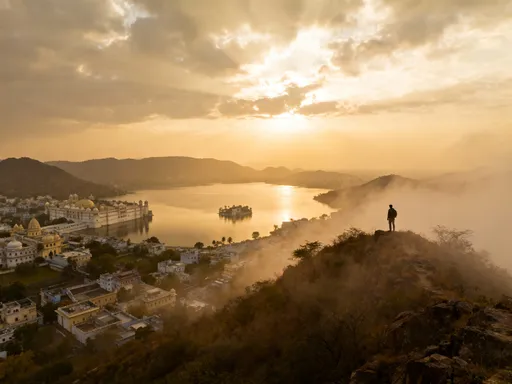
At the top, the panorama is nothing short of revelatory. The entire peninsula unfolds below—a harmonious mosaic of temple spires, red-tiled roofs, and lush greenery, all cradled by the slow curves of the Mekong and Nam Khan rivers. The city appears not as a collection of buildings, but as a living organism, breathing in rhythm with the land. One can trace the arc of Sisavangvong Road, spot the golden roof of Wat Xieng Thong, and follow the shimmering ribbon of the Mekong as it flows toward the horizon. In the distance, mist clings to the jungle-covered hills, softening the edge between earth and sky.
This vantage point does more than offer a photo opportunity—it provides understanding. From above, it becomes clear how thoughtfully Luang Prabang has been shaped by geography, religion, and tradition. The temples are not randomly placed; they occupy positions of spiritual and visual significance. The rivers are not just waterways; they are boundaries that preserve the city’s scale and serenity. The tree-lined streets and low-rise buildings ensure that nature is never fully displaced by development. In an age of urban sprawl and glass towers, Luang Prabang stands as a testament to balance—a city that grows not upward, but inward, deepening its roots rather than reaching for the sky. The view from Mount Phousi is not just beautiful; it is instructive. It teaches us that harmony is possible, that urban life can coexist with nature, and that beauty often lies in restraint.
Traveler’s Mindset: How to See Beyond the Postcard
To truly experience Luang Prabang, one must shed the habits of the checklist traveler. This is not a city to be rushed through, photographed from a tuk-tuk, and forgotten. Its magic lies in slowness—in sitting on a riverside bench for an hour, in returning to the same temple at different times of day, in learning the name of the woman who sells you sticky rice every morning. The most rewarding journeys here are not measured in miles, but in moments of connection.
Timing is essential. To avoid the midday heat and tourist crowds, rise early. The hours between 5:30 and 7:30 a.m. offer the purest experience of the city—cool air, soft light, and the sacred alms ceremony. Late afternoons, as the golden hour approaches, are ideal for photography and quiet walks. Evenings bring a gentle energy—families gathering, monks returning to their temples, and the night market along Sisavangvong Road coming alive with handmade crafts, textiles, and local snacks.
For those who wish to capture the city’s beauty, a lightweight camera or smartphone with good low-light capability is ideal. A tripod can help with early morning or dusk shots, but the most powerful tool is patience. Wait for the light to shift. Let a scene unfold. Resist the urge to compose the perfect image; instead, let the image find you. And above all, travel with respect. Dress modestly when visiting temples—shoulders and knees covered. Ask before photographing people. Remove shoes before entering homes or sacred spaces. These small acts of mindfulness are not just etiquette; they are offerings of dignity to a culture that values humility and grace.
The City That Lives in Layers
Luang Prabang does not reveal itself all at once. It unfolds slowly, like the petals of a lotus blooming on the surface of a still pond. Its cityscape is not defined by monuments alone, but by the interplay of light and shadow, silence and sound, tradition and time. It is a place where the sacred is woven into the everyday, where beauty is not loud, but lingering. To walk its streets is to be invited into a different way of being—one that values presence over pace, depth over display.
This is not a destination for those seeking excitement or spectacle. It is for those who seek stillness, who wish to listen more than they speak, to observe more than they consume. In a world that often feels fragmented and fast, Luang Prabang offers a rare gift: coherence. Here, architecture, nature, and culture exist in harmony, each element supporting the other in a quiet, enduring dance.
So let go of the need to capture everything. Stay longer. Return at different seasons. Sit by the river and watch the light change. Let the city work on you, not the other way around. Because the true magic of Luang Prabang is not in what you see, but in what you feel—a deep, quiet recognition that beauty, when it is real, does not shout. It waits. And when you are ready, it speaks.