You Gotta Taste This: Daejeon’s Food Scene Will Blow Your Mind
If you think Korean food is just kimchi and BBQ, Daejeon will completely change your mind. Tucked away in the heart of South Korea, this vibrant city is a hidden gem for food lovers. From sizzling street eats to cozy hole-in-the-wall restaurants, every bite tells a story. I went in looking for a quick meal and left with a full heart—and stomach. This isn’t just dining; it’s a flavor adventure waiting to be explored.
Discovering Daejeon: More Than Just a Transit City
Daejeon is often overlooked by international travelers rushing between Seoul and Busan, dismissed as merely a transit stop or a city of laboratories and universities. Yet this mid-sized metropolis, located at the geographic center of South Korea, is quietly becoming one of the country’s most dynamic culinary destinations. With a population of over 1.5 million, Daejeon blends urban energy with a surprisingly relaxed pace, making it ideal for unhurried exploration. Unlike the overwhelming scale of Seoul, Daejeon’s neighborhoods are walkable, interconnected, and full of character—each with its own distinct food identity.
As a hub for science and technology, home to institutions like KAIST and numerous research institutes, Daejeon attracts a diverse, educated population. This intellectual vibrancy spills into its food culture. The city’s residents include students, scientists, and young professionals from all over Korea and abroad, creating a melting pot of regional tastes and culinary curiosity. This diversity fuels innovation in the kitchen, where traditional recipes are reimagined with modern precision and global influences. Yet, despite its forward-thinking spirit, Daejeon remains deeply rooted in Korean food traditions, offering a rare balance between the familiar and the unexpected.
What makes Daejeon particularly appealing to food-minded travelers is its authenticity. There’s no performative tourism here—no overpriced restaurants catering to Instagram trends. Instead, you’ll find meals served with sincerity, in unassuming spaces where the focus is on flavor, not presentation. The city’s layout encourages discovery: compact districts like Jungangno, Yuseong, and Seodaejeon are easily navigated by foot or public transit, with food options appearing around every corner. Whether you’re strolling through a bustling market or ducking into a basement noodle shop, Daejeon rewards the curious eater with warmth and flavor.
The Soul of Daejeon: Street Food Markets That Never Sleep
If there’s a heartbeat to Daejeon’s food culture, it pulses strongest in its street food markets. These lively hubs are where everyday Koreans gather after work, where families stroll on weekends, and where visitors can dive headfirst into the rhythm of local life. Among the most beloved is the Daejeon Central Market, a sprawling indoor-outdoor complex that has served the city for generations. Here, narrow alleys are lined with stalls offering everything from fresh produce to handmade buns, but it’s the sizzling grills and bubbling pots that draw the longest lines.
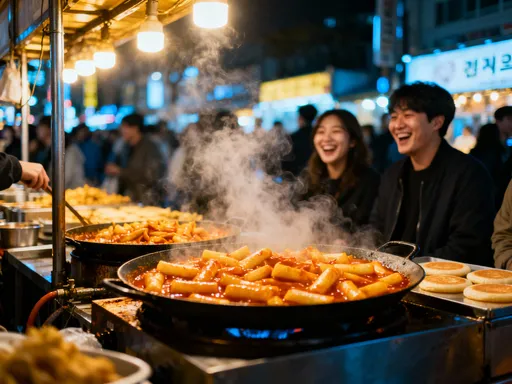
One bite of the market’s famous tteokbokki—spicy rice cakes bathed in a fiery red sauce—reveals why it’s a national favorite. The chewy texture of the rice cakes contrasts beautifully with the bold, slightly sweet heat of the sauce, often spiked with fish cakes and boiled eggs. Nearby, vendors fry up hotteok, a sweet pancake filled with brown sugar, cinnamon, and crushed nuts. The moment you break one open, steam escapes, carrying the warm, caramel-like aroma that makes this winter treat irresistible. For something savory, grilled odeng (fish cake) on skewers, served in a light broth or dry with dipping sauce, offers a satisfying umami punch.
The sensory experience is just as important as the food itself. The air is thick with the scent of sesame oil, garlic, and chili flakes. The sizzle of grills competes with the chatter of vendors calling out specials and the laughter of friends sharing late-night snacks. These markets are not just places to eat—they are social spaces, where food becomes a bridge between strangers. Even if you don’t speak Korean, a smile and a pointing finger are often enough to place an order. And while the energy is electric, there’s a comforting familiarity, a sense that this is how food is meant to be enjoyed: fresh, fast, and shared.
Jungangno, another major district, comes alive in the evenings with pop-up carts and sidewalk grills. It’s especially popular with young adults and office workers looking for a quick, flavorful bite after a long day. The variety here is staggering: from gyeran-ppang (egg bread) baked in small molds to dak-kkochi (grilled chicken skewers) glazed with a sticky soy-based sauce. Each stall has its regulars, and many have been run by the same family for decades. This continuity ensures that recipes are passed down with care, preserving the integrity of flavors that have defined Korean street food for generations.
Hidden Eateries: Where Locals Really Eat
Beyond the well-trodden market paths lie Daejeon’s true culinary treasures—tiny restaurants tucked into alleyways, beneath apartment buildings, or hidden behind unmarked doors. These are not the kind of places you’ll find on glossy travel blogs, but they are exactly where the most authentic meals are served. Often family-run and operating with minimal staff, these eateries prioritize taste over trend, tradition over technology. A simple sign, a steamed window, and the sound of bubbling stews are often the only clues that something special lies within.
One such spot might serve only naengmyeon, cold buckwheat noodles served in a tangy iced broth, a dish that originated in the north but has found a loyal following in Daejeon. The owner, a woman in her sixties, might hand-roll each noodle batch in the early morning, ensuring the perfect chew. Another could specialize in galbitang, a clear beef short rib soup simmered for hours until the broth is rich and fragrant. These meals are not rushed; they are crafted with patience and care, reflecting a deep respect for ingredients and process.
Kimchi jjigae, or kimchi stew, is another staple found in these hidden kitchens. Unlike the version you might get in a chain restaurant, the homemade version uses aged kimchi, giving it a deeper, more complex flavor. It’s often served with a side of freshly steamed rice and a few banchan (side dishes) like seasoned spinach, radish cubes, or fermented soybean paste. The stew bubbles in a stone pot, its surface dotted with tofu and pork, releasing a pungent, comforting aroma that fills the small dining room. Eating here feels personal, almost intimate, like being invited into someone’s home kitchen.
What sets these places apart is their lack of pretense. There are no English menus, no QR code ordering, and rarely any online presence. Yet, with a little effort, even non-Korean speakers can navigate these spaces. A friendly gesture, a willingness to point and smile, and an open mind go a long way. Many locals appreciate the attempt to engage, and some may even offer recommendations with a warm nod. These interactions, small as they may be, are part of what makes Daejeon’s food scene so rewarding. It’s not about convenience—it’s about connection.
Flavor Meets Innovation: Modern Twists in Traditional Dishes
While Daejeon honors its culinary roots, it is also a city unafraid to experiment. Thanks to its large student population and thriving startup culture, the city has become a testing ground for creative reinterpretations of Korean classics. In university districts like those near KAIST and Chungnam National University, you’ll find cafes and bistros where chefs blend tradition with global influences, creating dishes that are both familiar and surprising.
Take, for example, a modern take on bibimbap. Instead of the usual stone bowl, it might be served deconstructed on a wooden board, with ingredients arranged like a work of art. The gochujang (fermented chili paste) could be infused with truffle oil, or the rice might be replaced with quinoa for a healthier twist. Another restaurant might offer kimchi pancakes with a side of wasabi mayo or serve bulgogi (marinated beef) tacos with sesame tortillas, blending Korean and Mexican flavors in a way that feels playful yet respectful.
These innovations are not about replacing tradition but expanding it. Many of these fusion dishes are created by young chefs who grew up eating their grandmothers’ recipes but trained in international culinary schools. They understand the soul of Korean food—its balance of spicy, sweet, sour, and salty—and use that foundation to build something new. The result is a dining experience that appeals to both older generations, who appreciate the nod to authenticity, and younger diners, who crave novelty and visual appeal.
Even in more casual settings, you’ll find signs of creativity. A simple bowl of ramyeon (instant noodles) might be elevated with a sous-vide egg, kimchi puree, and crispy seaweed. Desserts, too, are getting a makeover: matcha tiramisu, black sesame crème brûlée, and yuzu cheesecake reflect a growing interest in blending Korean ingredients with Western techniques. These dishes may not be found in every home, but they represent the evolving palate of a city that values both heritage and progress.
Coffee Culture & Sweet Escapes: Beyond the Meal
In Daejeon, the love of food extends well beyond main courses. The city has cultivated a thriving coffee culture, where cafes are not just places to drink but spaces to linger, read, work, or meet friends. With over 2,000 cafes in the city, Daejeon ranks among South Korea’s most caffeinated urban centers. But this isn’t just about quantity—it’s about quality and atmosphere.
Independent roasteries take pride in sourcing beans from ethical farms, roasting in small batches, and brewing with precision. A typical cafe in the Yuseong district might feature minimalist decor, soft jazz, and baristas who explain the origin and flavor notes of each brew. Pour-overs, siphon coffee, and cold brews are common, offering a more contemplative alternative to the fast-paced life outside. These spaces are especially popular with women in their 30s and 40s, who appreciate the quiet elegance and opportunity for relaxation.
Equally beloved are the dessert cafes specializing in bingsu, a finely shaved ice treat topped with everything from red beans and condensed milk to mango, strawberries, and even cheesecake crumbs. The texture is light and fluffy, more like snow than ice, and the flavors are layered to create a rich yet refreshing experience. One bite of a high-quality bingsu is enough to understand why it’s become a national obsession. Paired with a perfectly brewed coffee, it’s the ideal afternoon indulgence.
These sweet escapes are more than just treats—they are part of Daejeon’s lifestyle. In a society that values hard work and discipline, the act of pausing for coffee and dessert is a form of self-care. It’s a moment to breathe, to enjoy beauty in simplicity, and to connect with others in a calm, welcoming environment. For visiting families, these cafes offer a peaceful retreat, a place where mothers can chat while children enjoy fruit-topped bingsu in a safe, clean setting.
Practical Tips: How to Eat Like a Local in Daejeon
Visiting Daejeon’s food scene is a joy, but a few practical tips can make the experience even smoother. First, timing matters. Street food markets like Daejeon Central Market are liveliest in the late afternoon and evening, especially on weekends. Arriving around 5:30 PM allows you to avoid the biggest crowds while still catching the full energy of the scene. Many small restaurants close by 9 PM, so planning your meals earlier in the evening is wise.
When it comes to payment, while credit cards are widely accepted in larger establishments, many street vendors and family-run eateries operate on a cash-only basis. Carrying a small amount of Korean won in bills and coins ensures you won’t miss out on a delicious snack. ATMs are readily available at convenience stores and banks, often with English interfaces.
Menus in smaller restaurants may not have English translations, but this doesn’t have to be a barrier. Using a translation app or pointing to what others are eating can be effective. Learning a few basic Korean phrases—such as “masitge juseyo” (please give me something delicious) or “ppalli” (quickly, when in a hurry)—can earn you a smile and sometimes even a better recommendation. Observing local etiquette, like not pouring your own drink when sharing alcohol or using both hands to receive food, also shows respect and can enhance your experience.
Getting around is easy thanks to Daejeon’s efficient public transit system. The Daejeon Metro has two lines that connect major districts, and buses fill in the gaps. Walking is another excellent option, especially in compact areas like Jungangno, where shops and restaurants are clustered. Wearing comfortable shoes is a must—exploring on foot often leads to the best discoveries. For families, strollers may be challenging in older market areas with uneven pavement, so lightweight carriers are recommended.
Finally, don’t be afraid to try something unfamiliar. Korean cuisine includes many fermented, spicy, or pungent flavors that may be new to Western palates. But these are often the dishes that leave the strongest impression. Starting with milder options like mandu (dumplings) or jajangmyeon (black bean noodles) can ease you in, while gradually building up to bolder choices like sundae (Korean blood sausage) or raw seafood dishes. The key is curiosity and openness—qualities that Daejeon’s food culture rewards generously.
Why Daejeon’s Food Matters: A Gateway to Korean Culture
Daejeon’s food scene is more than a collection of restaurants and recipes—it is a reflection of Korean values, community, and identity. Every meal tells a story of craftsmanship, passed down through generations, of balance between tradition and innovation, and of the deep connection between food and human connection. In a world where fast food and convenience often dominate, Daejeon reminds us that eating can be an act of mindfulness, care, and joy.
For women in their 30s to 50s, many of whom manage households and prioritize family well-being, Daejeon’s approach to food offers inspiration. It shows how meals can be both nourishing and meaningful, how simplicity can coexist with richness, and how sharing food strengthens bonds. The city’s emphasis on fresh ingredients, slow cooking, and communal dining aligns with values of health, warmth, and togetherness.
Moreover, Daejeon challenges the idea that Korea’s culinary heart lies only in Seoul. While the capital offers glitz and variety, Daejeon provides depth and authenticity. It is a place where food is not a performance but a practice—a daily ritual that brings people together. By exploring Daejeon’s flavors, travelers gain not just a taste of Korea, but a deeper understanding of its soul.
So if you’re planning your next trip to South Korea, consider stepping off the beaten path. Skip the crowded tourist spots and head to the center of the country, where the food is honest, the people are kind, and every meal feels like a discovery. Daejeon may not be on every itinerary, but for those willing to look, it offers one of the most rewarding culinary journeys in Asia. Come hungry, stay curious, and let the flavors guide you. You might just leave with more than a full stomach—you might leave with a fuller heart.